
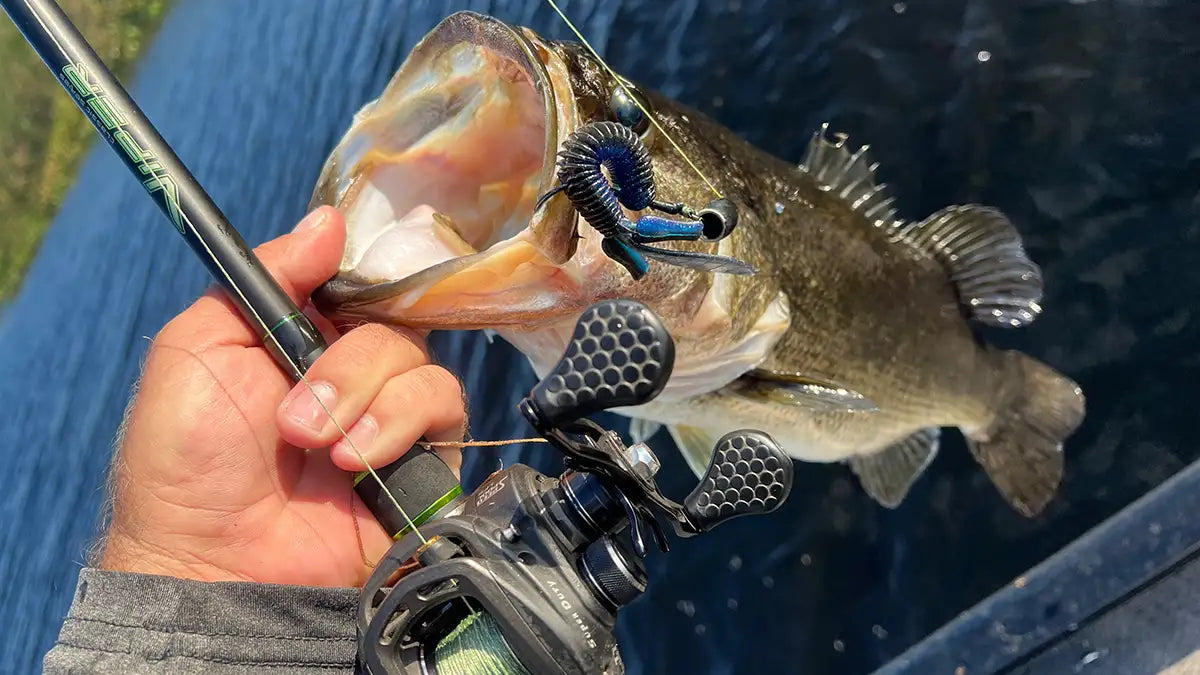
Whether you are standing on the muddy banks of the James River or casting into a glass-calm farm pond, the sheer volume of lure options can be overwhelming. For many anglers, the "wall of plastic" at the tackle shop is a maze of neon colors and strange names. However, successful fishing isn't about having a thousand lures; it’s about understanding the mechanics of a few key categories and knowing when to deploy them.
To master the freshwater environment, you need to categorize your tackle by where it swims in the water column: Topwater, Mid-water, and Bottom-dwelling. Here is a comprehensive breakdown of the essential lures that belong in every serious angler's arsenal.

1. The Surface Specialists: Topwater Lures
There is no thrill in fishing quite like the visual explosion of a fish breaking the surface. Topwater lures are designed to create commotion and mimic wounded prey.
-
The Whopper Plopper: This lure has become a modern legend for a reason. It features a rotating tail section that churns the water, creating a distinct "plopping" or "gurgling" sound.
-
Best For: Active, aggressive fish. It is highly effective in rivers where the current helps carry the sound, and it’s a "search bait"—meaning you can cast it long distances to find where the fish are hiding.
-
-
Poppers: These have a concave "cup" at the nose. When you twitch your rod tip, the lure "pops" and spits water forward.
-
Best For: Precise targeting. Use a popper near lily pads or fallen logs in a pond. It stays in the strike zone longer than a Whopper Plopper, allowing you to tease a cautious bass into biting.
-
-
Walking Baits (The "Spook"): These cigar-shaped lures have no built-in action. The angler must "walk the dog" by twitching the rod rhythmically so the lure zigs and zags.
-
Best For: Calm mornings on the pond. The side-to-side action mimics a dying shad perfectly.
- Pro Tip: Explore our full selection of topwater lures to find the perfect surface commotion for your next trip.
-
2. The Versatile Workhorses: Jigs
If you asked a professional angler to pick only one lure to feed their family, most would choose a Jig. A jig is essentially a lead weight molded onto a hook, usually dressed with a silicone skirt.

-
The Casting/Flipping Jig: These are heavy-duty and often feature a weed guard (a stiff bristle that prevents the hook from snagging).
-
How to Fish It: You don't "retrieve" a jig like a lure with a propeller. You "bounce" it. Let it sink to the bottom, then give it small hops. It mimics a crawfish scurrying across the rocks.
-
-
The Swim Jig: Unlike the casting jig, this is meant to be reeled in steadily. It has a sleeker head design to cut through grass.
-
The "Trailer" Secret: Always tip your fishing jigs with a soft plastic "trailer"—like a small paddle-tail or a plastic craw—to add bulk and action.
-
3. The Texas Rig: The King of Soft Plastics
When people talk about "plastic worms," the Texas Rig is the gold standard for rigging them. It involves a bullet-shaped weight that slides freely on the line, followed by an offset hook buried inside the plastic body.

-
The Advantage: This is "weedless." Because the hook point is tucked inside the worm, you can throw this directly into the thickest brush, fallen trees, or heavy grass without snagging.
-
The Action: It is a slow-finesse technique. Most strikes occur when the soft plastic bait is sitting perfectly still or on the initial "fall."
-
Variations: While the 6-inch "ribbon tail" worm is classic, you can Texas-rig "creature baits" (which look like aliens with wings and legs) or "stick baits" (like the famous Senko) for a different vibration.
4. Moving Baits: Spinnerbaits and Chatterbaits
These lures are designed to cover a lot of water and trigger "reaction strikes." They don't look like anything specific in nature, but they create so much vibration and flash that a fish feels compelled to attack.

-
Spinnerbaits: Featuring one or two metal blades that spin as you reel, these are fantastic for murky river water. The blades create a "thump" that fish can feel through their lateral lines even if they can't see clearly.
-
Chatterbaits (Bladed Jigs): This is a hybrid between a jig and a spinnerbait. It has a hexagonal metal blade attached to the eye of a jig. It vibrates violently when retrieved.
-
Inventory Note: We stock a variety of spinnerbaits and bladed lures designed to trigger aggressive strikes in stained water.
-
Pro Tip: These are the ultimate "pond killers" in the spring. If the water is stained or "turned over," the vibration of a Chatterbait will find fish that other lures miss.
-
5. Diving Deeper: Crankbaits
Crankbaits are hard plastic lures with a clear "lip" or "bill" on the front. The size and angle of that lip determine how deep the lure will dive.

-
Squarebill Crankbaits: These have a square-shaped lip and usually dive 2–5 feet. They are designed to "crash" into rocks and wood. When the lure hits a submerged log, it deflections wildly—this moment of deflection is usually when a fish strikes.
-
Deep Divers: These have long, prominent lips that can pull the lure down to 15 or 20 feet. These are better suited for large river channels or deep lake points rather than shallow ponds.
6. Choosing the Right Lure for Your Environment
| Lure Type | Best Environment | Water Clarity | Skill Level |
| Whopper Plopper | Open Water / River Edges | Clear to Stained | Beginner (Reel only) |
| Texas Rig Worm | Heavy Brush / Lily Pads | Any | Intermediate (Feel) |
| Jig & Trailer | Rocky Bottoms / Docks | Stained to Muddy | Advanced (Sensitivity) |
| Spinnerbait | Grass Edges / Murky River | Muddy | Beginner |
| Popper | Quiet Pond Pockets | Clear | Intermediate (Rhythm) |
Summary for the Local Angler
In a pond environment, stealth and finesse are key. Because the water is often still and the fish are localized, start with a topwater popper at dawn, then move to a Texas-rigged worm as the sun gets high and the fish retreat to the shade of the weeds.
In a river (like the James), you are fighting the current. You want lures that stay "in the strike zone" despite the moving water. A heavy jig or a spinnerbait is ideal here because they have the weight to get down through the current and the vibration to compete with the noise of the moving water.
Understanding these tools transforms fishing from a game of luck into a game of strategy. Next time you head out from the shop, don't just pick a color you like—pick a tool that matches the "depth" and "mood" of the water. Tight lines!


Share:
More Than Just a Hammer: A Guide to the Axe Poll